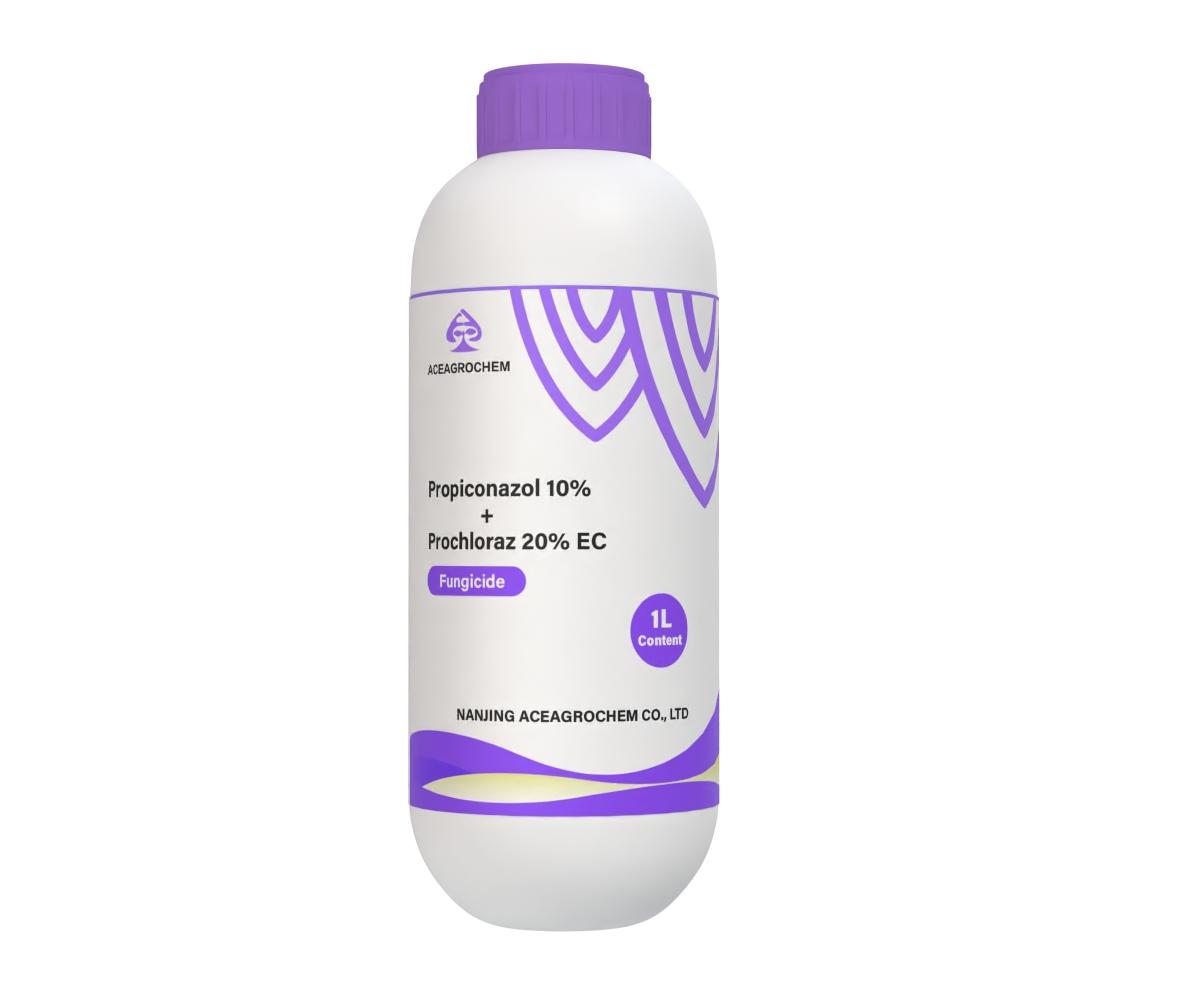
Propiconazol 10% + Prochloraz 20% EC
Classification:
Fungicide
Formulation:
Propiconazol 10% + Prochloraz 20% EC (Emulsifiable Concentrate)
CAS NO:
Propiconazol: 60207-90-1;
Prochloraz: 67747-09-5
USAGE:
This fungicide is used to control a wide range of fungal diseases in various
crops such as cereals, fruits, vegetables, and ornamentals. It is effective
against diseases caused by Ascomycetes, Basidiomycetes, and Deuteromycetes
fungi, including powdery mildew, rust, and leaf spot diseases.
Pack size:
500mL, 1L, 5L, 20L/drum, or as required
Direction for Use
| Crop | Target Diseases | Dosage (10% Propiconazol + 20% Prochloraz EC) | Application Timing | Remarks |
|---|---|---|---|---|
| Cereals | Powdery mildew, Rust | 300-500 mL/ha | At the early stage of disease development | 1) REI: 12 hrs 2) Max 2 applications/season |
| Fruits | Anthracnose, Leaf spot | 400-600 mL/ha | Before the onset of disease or at the early infection stage | Add adjuvant for better adhesion |
| Vegetables | Downy mildew, Blight | 200-400 mL/ha | Regular intervals during the growing season | PHI: 7-14 days depending on the crop |
| Ornamentals | Botrytis blight | 300-500 mL/ha | When symptoms are first observed | Spray evenly on both sides of the leaves |
Product Details
Mode of Action:
-Inhibits the biosynthesis of ergosterol, an essential component of fungal cell
membranes
-Disrupts the normal growth and development of fungi
-Systemic action, can be absorbed by plants and translocated within the plant
tissues
Benefits:
-Broad-spectrum fungicidal activity
-Protects plants from multiple fungal diseases simultaneously
-Long-lasting control effect
-Compatible with many other Pesticide
Precautions:
-PPE: Chemical-resistant gloves, respirator, protective clothing
-Do not apply in hot and sunny weather or when rains are expected within 2
hours
-Do not mix with alkaline Pesticide
-Storage: Store in a cool, dry, and well-ventilated place at 0°C-35°C
Environmental Hazards:
-Toxic to fish and other aquatic organisms
-Do not discharge into water bodies
-Low toxicity to birds, but avoid direct contact with feed
-Degradable in soil under normal environmental conditions